Brewarrina
Day 5 was a driving day, south from Lightning Ridge to Bourke, with a break in Brewarrina on the way through. Brewarrina earns a footnote as the first town on the trip with zero Optus reception. Not one bar.
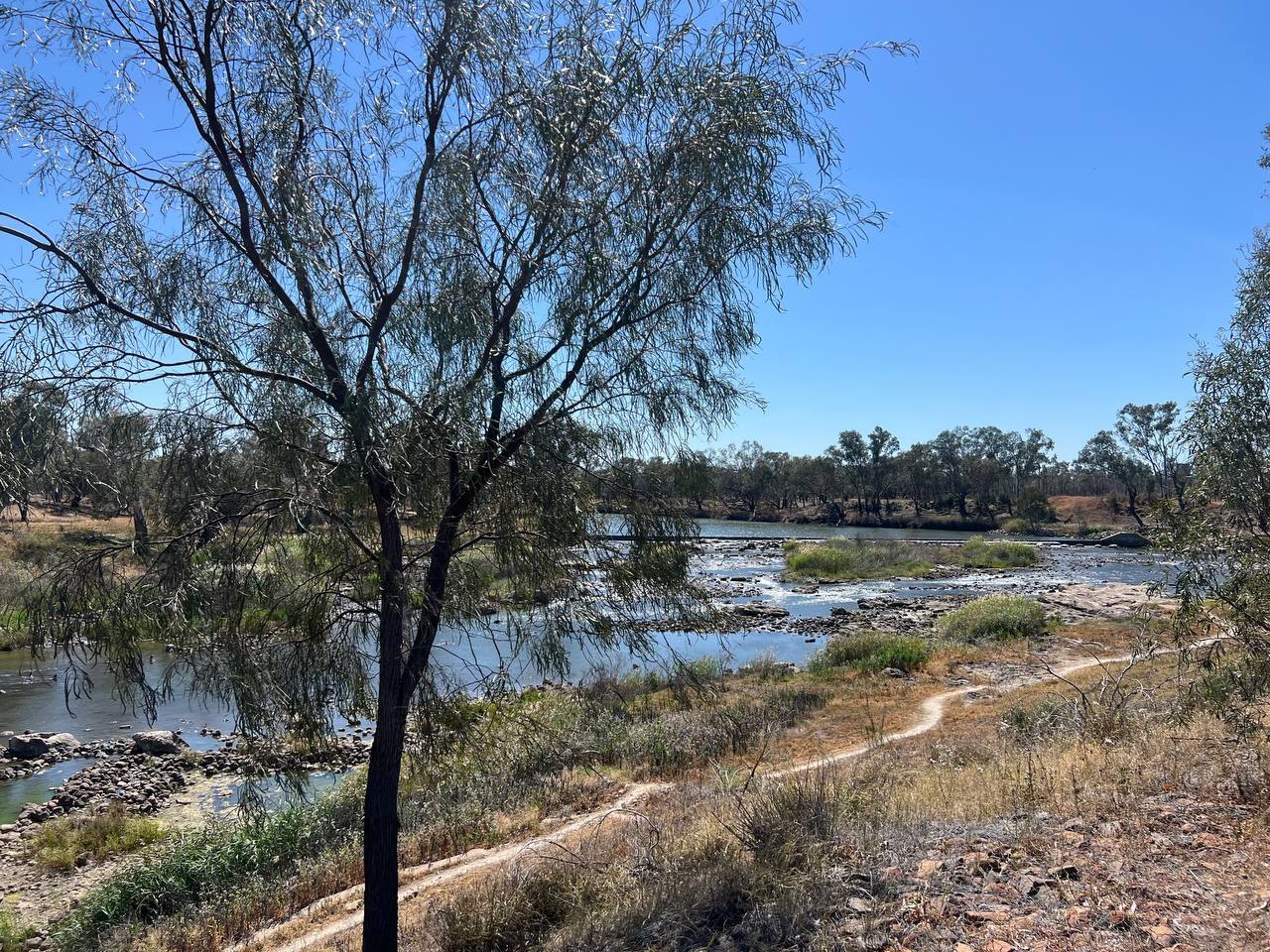 The Barwon River at Brewarrina.
The rocks in that river are not just scenery. Brewarrina is home to Baiame's Ngunnhu, the Brewarrina fish traps: a complex network of river stones arranged into ponds and channels to catch fish travelling downstream. They are National Heritage listed, possibly more than 40,000 years old, and among the oldest human-made structures in the world. The Barwon was a gathering place for Aboriginal people from across the region for thousands of years before anyone thought to put a pub there.
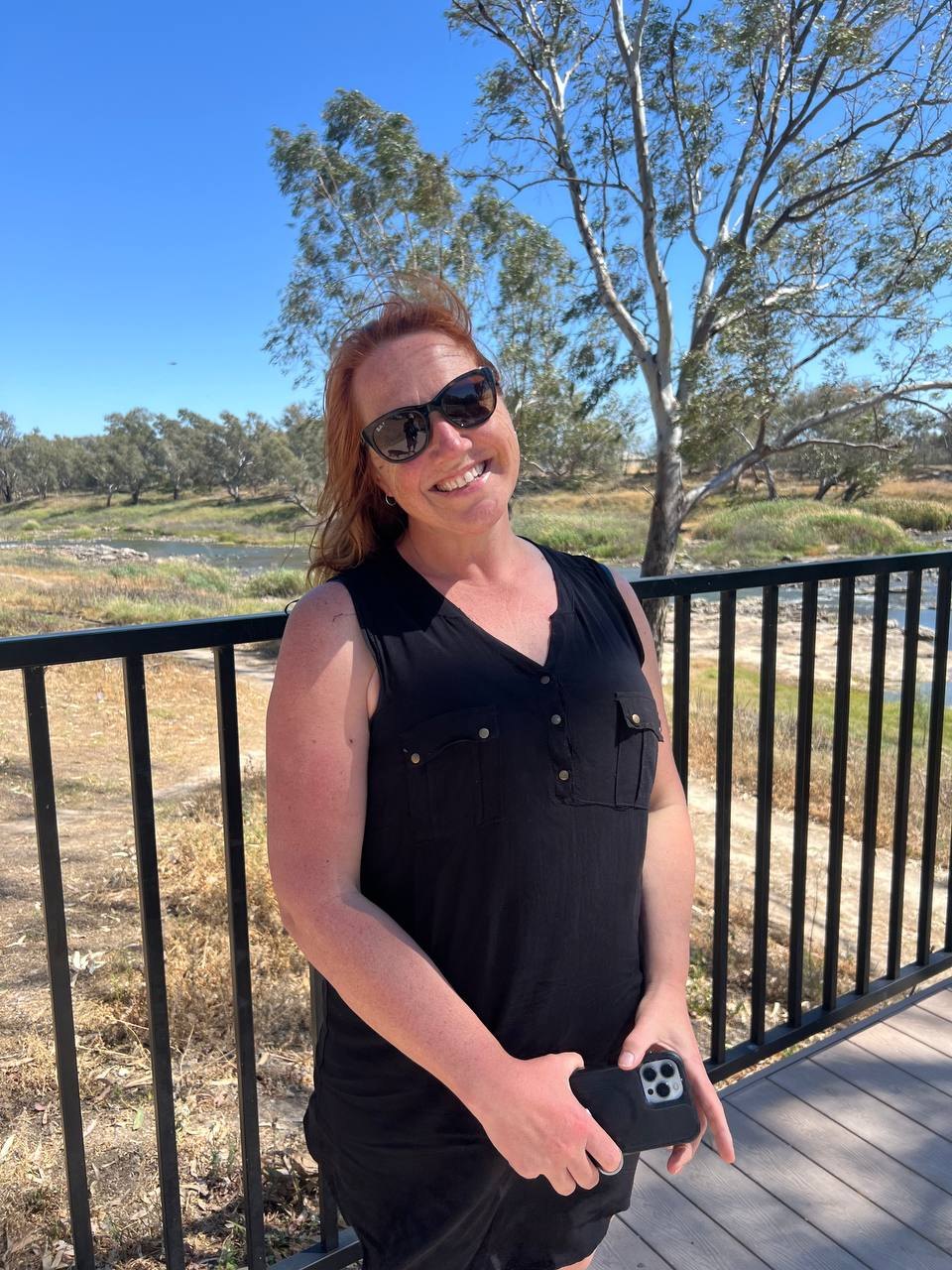 The viewing deck above the river.
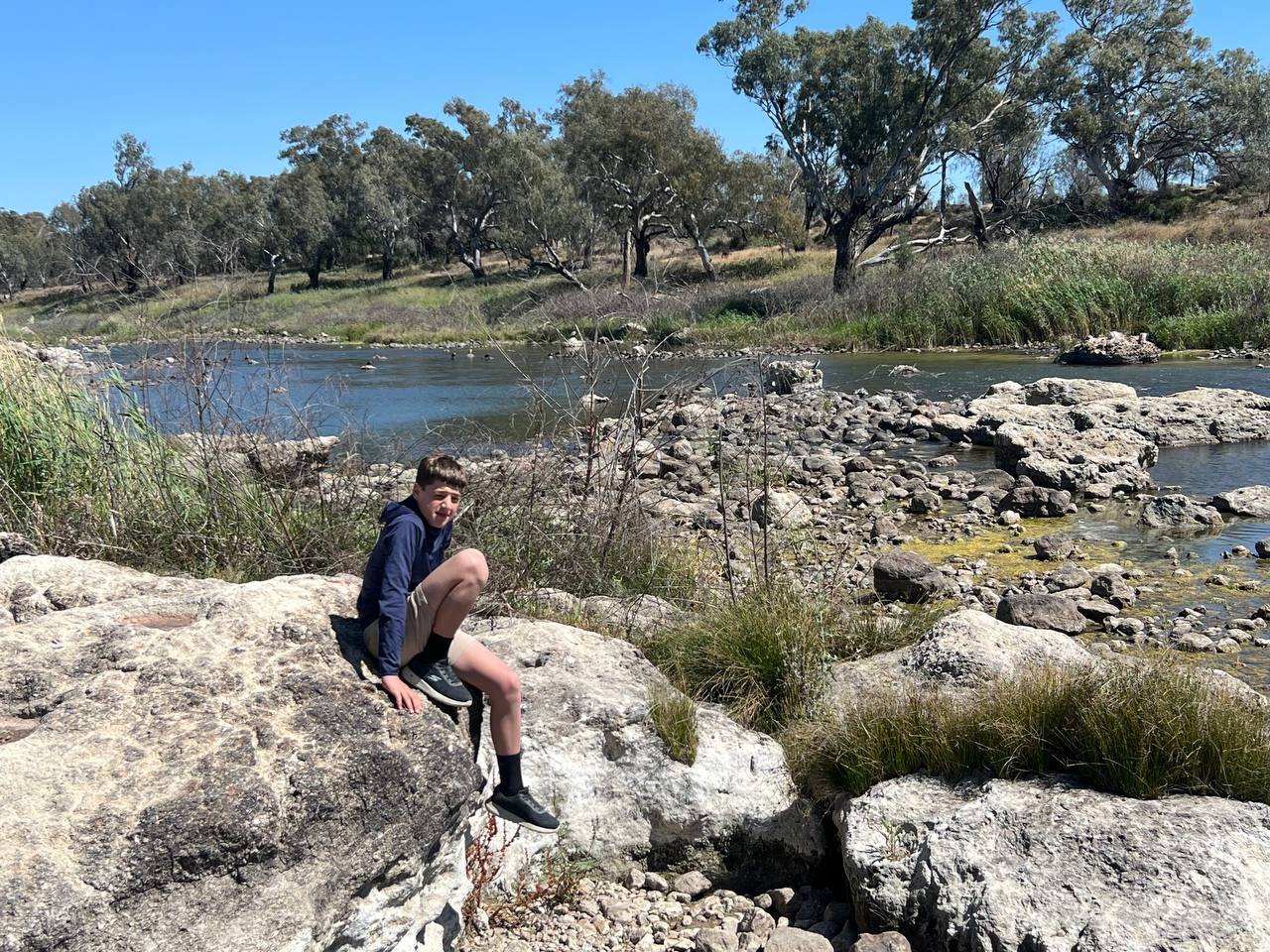 Down on the rocks.
Diesel watch
Relief at the bowser. Diesel prices have started coming down.
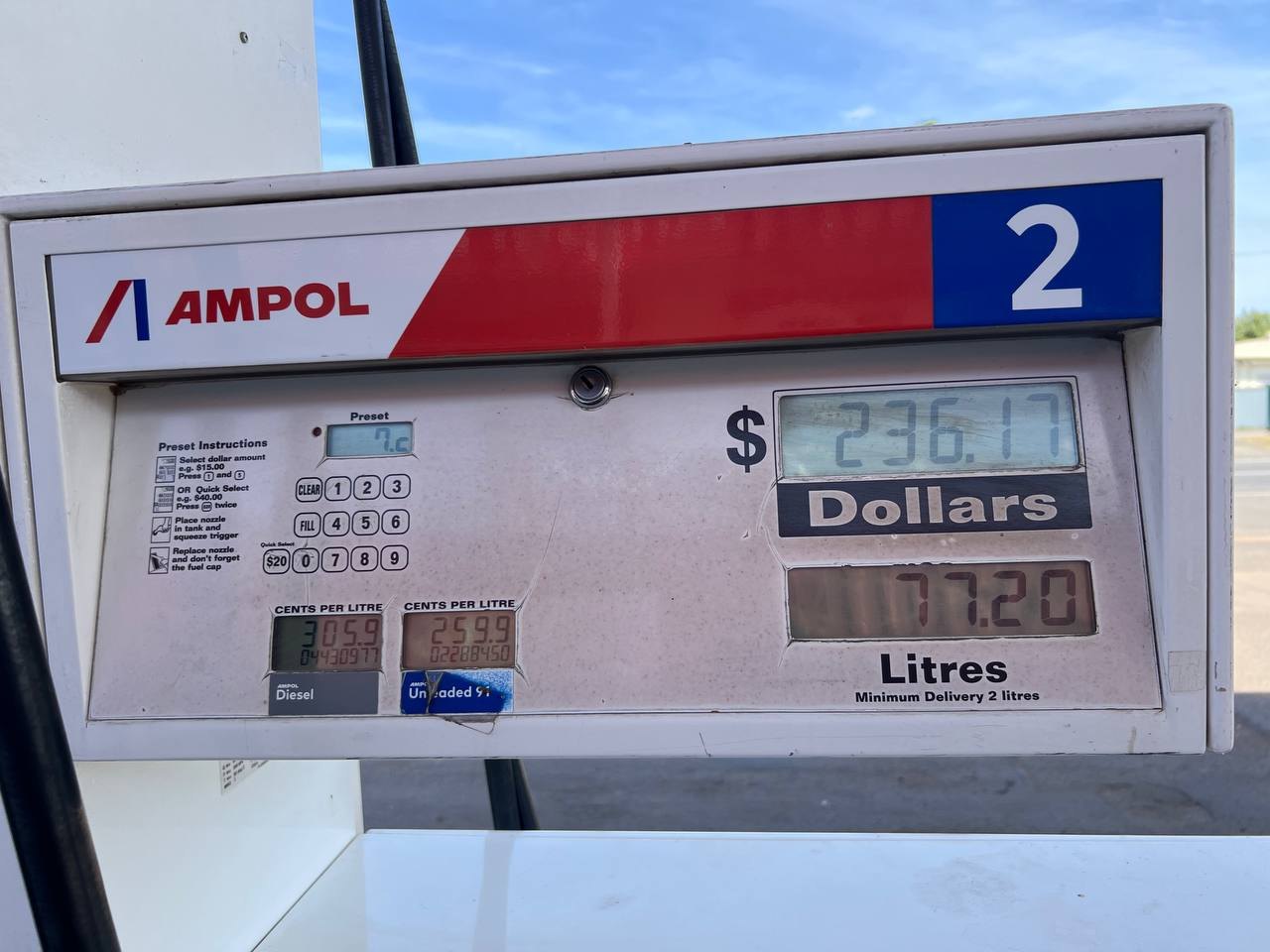 Down from the record: $236.17 for 77.20 litres at 305.9 cents a litre.
The Port of Bourke
Into Bourke, and straight down to the wharf on the Darling.
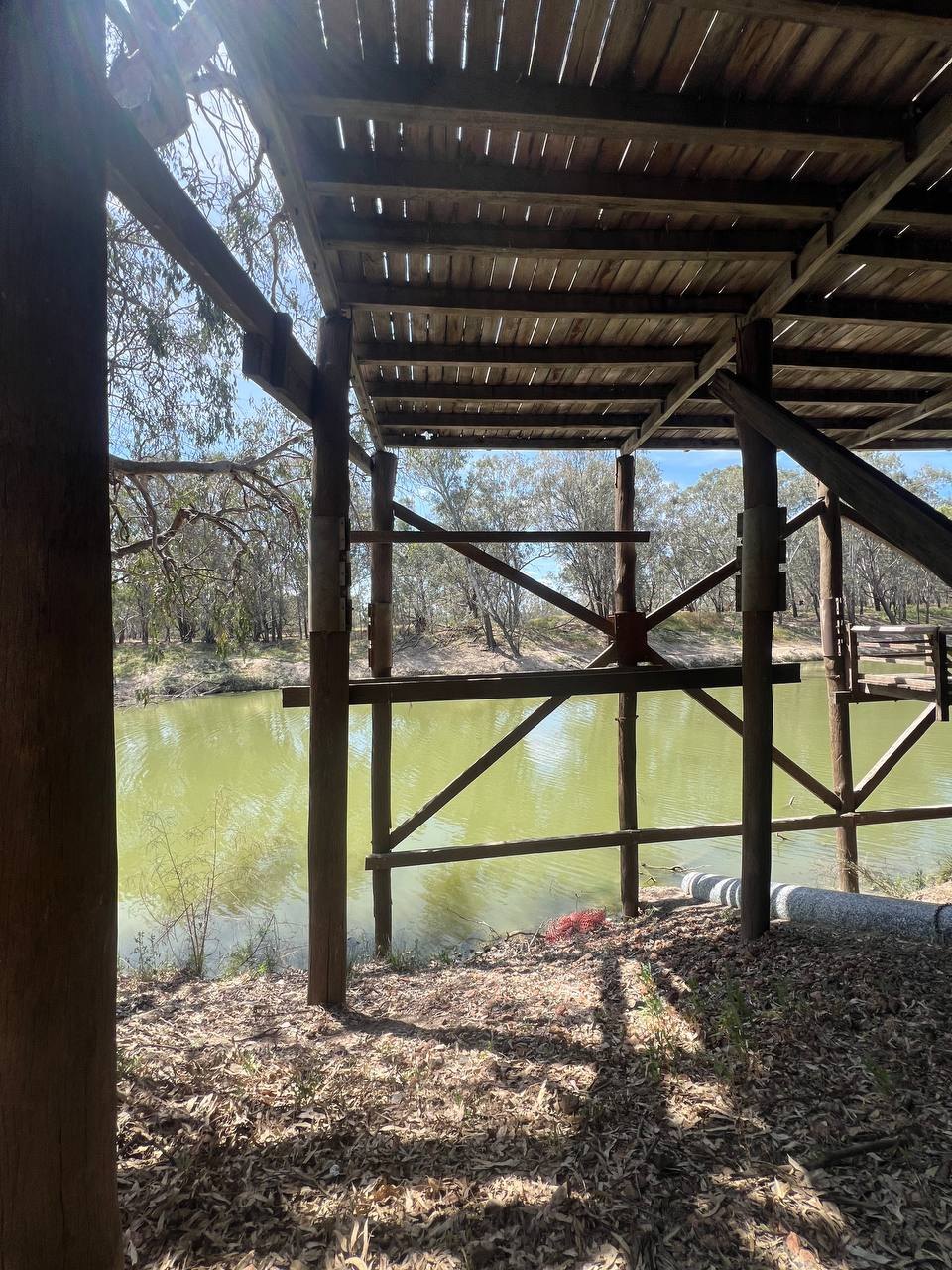 Under the wharf at Bourke.
The Darling runs about 1,500 kilometres from northern New South Wales to Wentworth, where it joins the Murray, and for half a century it was a highway. In the late 1800s Bourke was one of the busiest inland ports in the country: up to 80 riverboats worked the reach, and at its peak the wharf moved tens of thousands of bales of wool a year, shipped down the Darling to the Murray and out through the South Australian ports. The river was never reliable, too shallow some years, in flood others, and when the railways arrived the trade died with it. By the early 1900s the river highway was finished. The wharf standing today is a replica, built to show how the original design rode up and down with the Darling's wildly varying levels.
Fred Hollows
We visited the local cemetery and paid our respects to Fred Hollows.
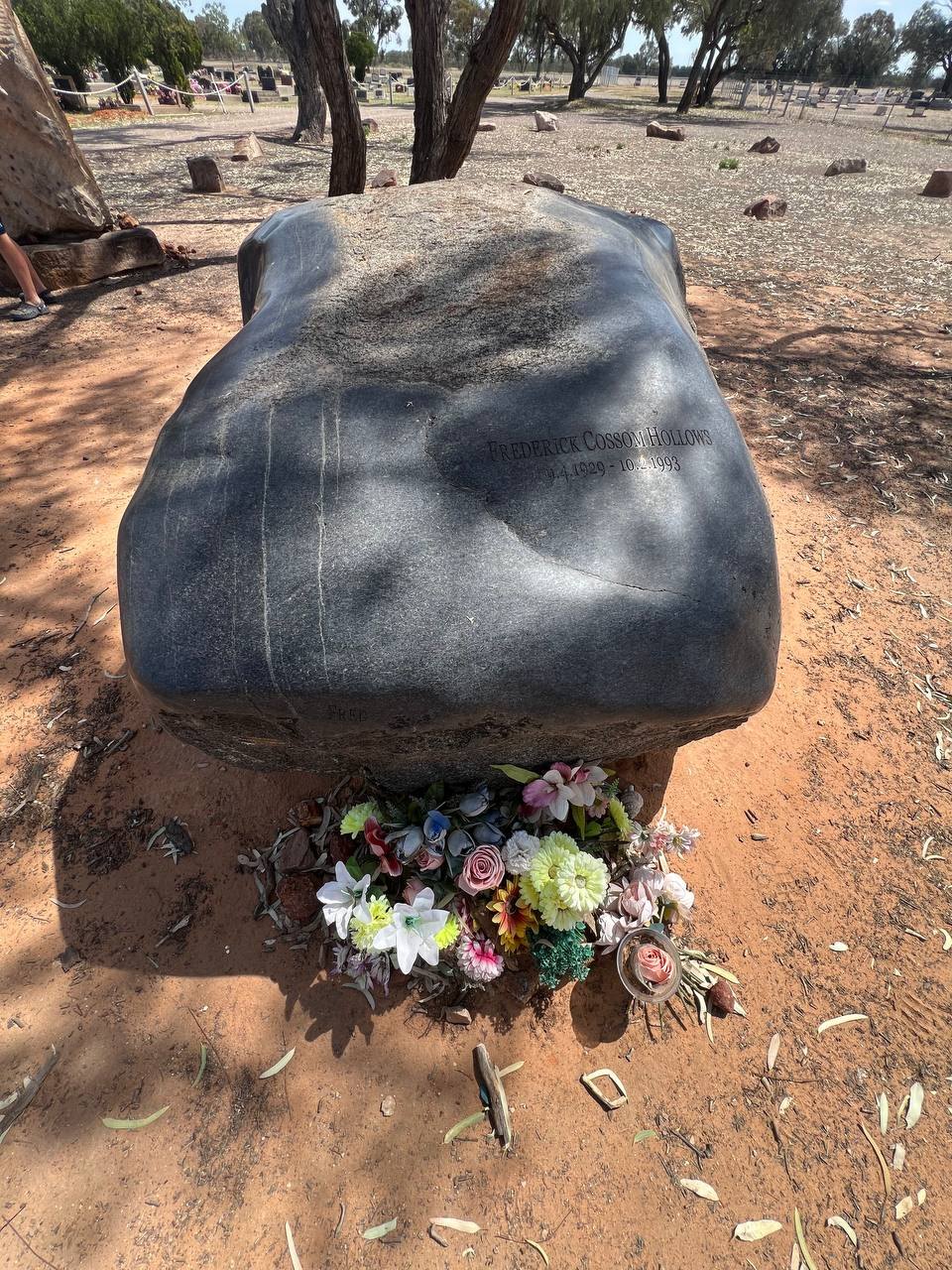 Fred Hollows' grave at Bourke Cemetery.
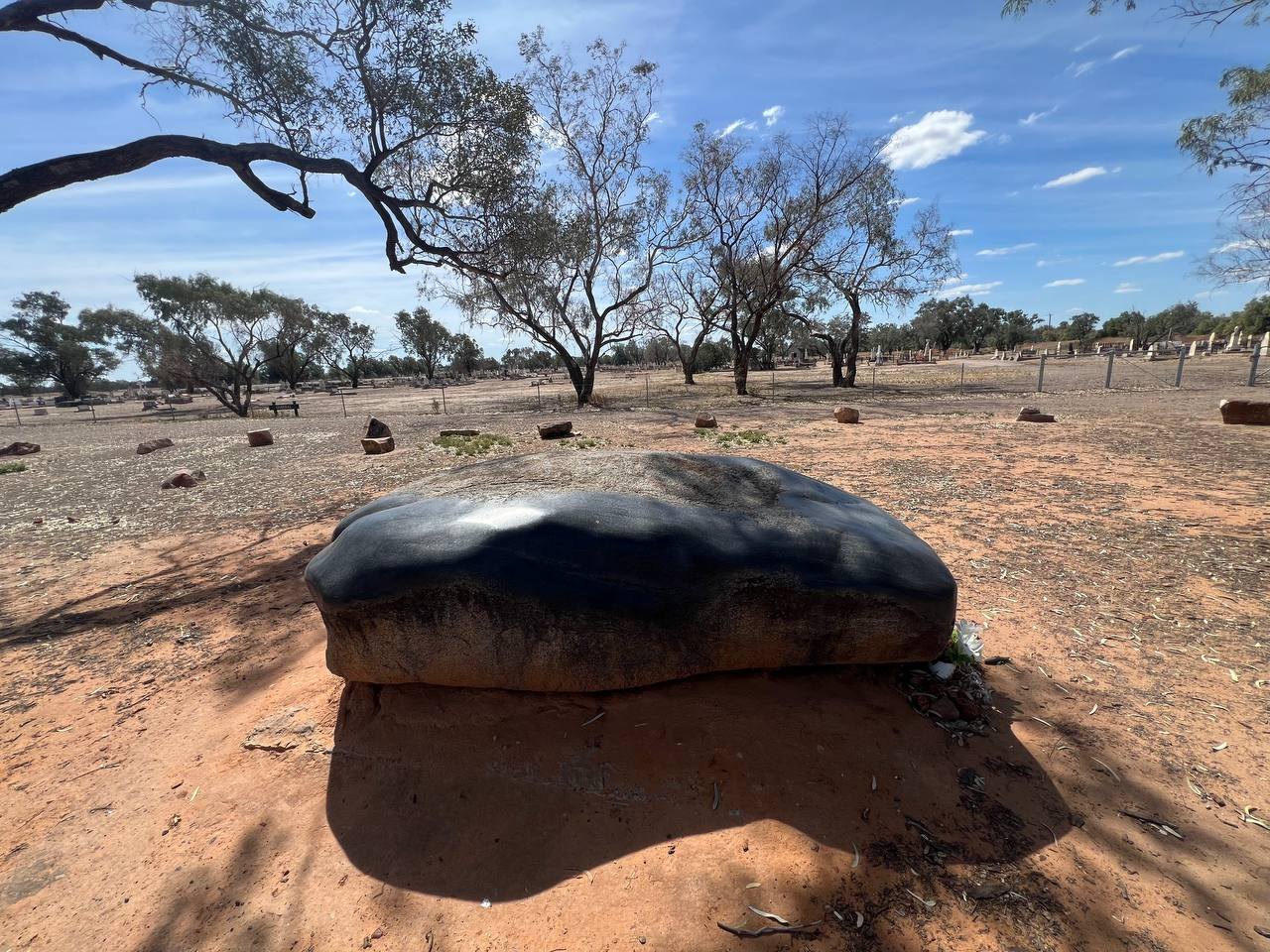 The grave in 2006 was re-marked with this granite sculpture by Andreas Buisman. The polished face is shaped to recall an intraocular lens.
Hollows was a New Zealand-born ophthalmologist who made restoring sight his life's work. In the early 1970s he worked with Aboriginal communities around Bourke and across outback New South Wales, and what he saw there, treatable eye disease going untreated, drove the National Trachoma and Eye Health Program, which screened more than 100,000 people in remote communities. He set up intraocular lens factories in Eritrea and Nepal so that cataract surgery in the developing world could cost as little as $25 an eye, was named Australian of the Year in 1990, and founded the Fred Hollows Foundation with his wife Gabi to keep the work going after him. He died in 1993, was given a state funeral, and, at his own request, was buried in the red dirt at Bourke, a town he had loved since that first work in the seventies. Four out of five people who are blind don't need to be, as his foundation says. He spent his career on the four.
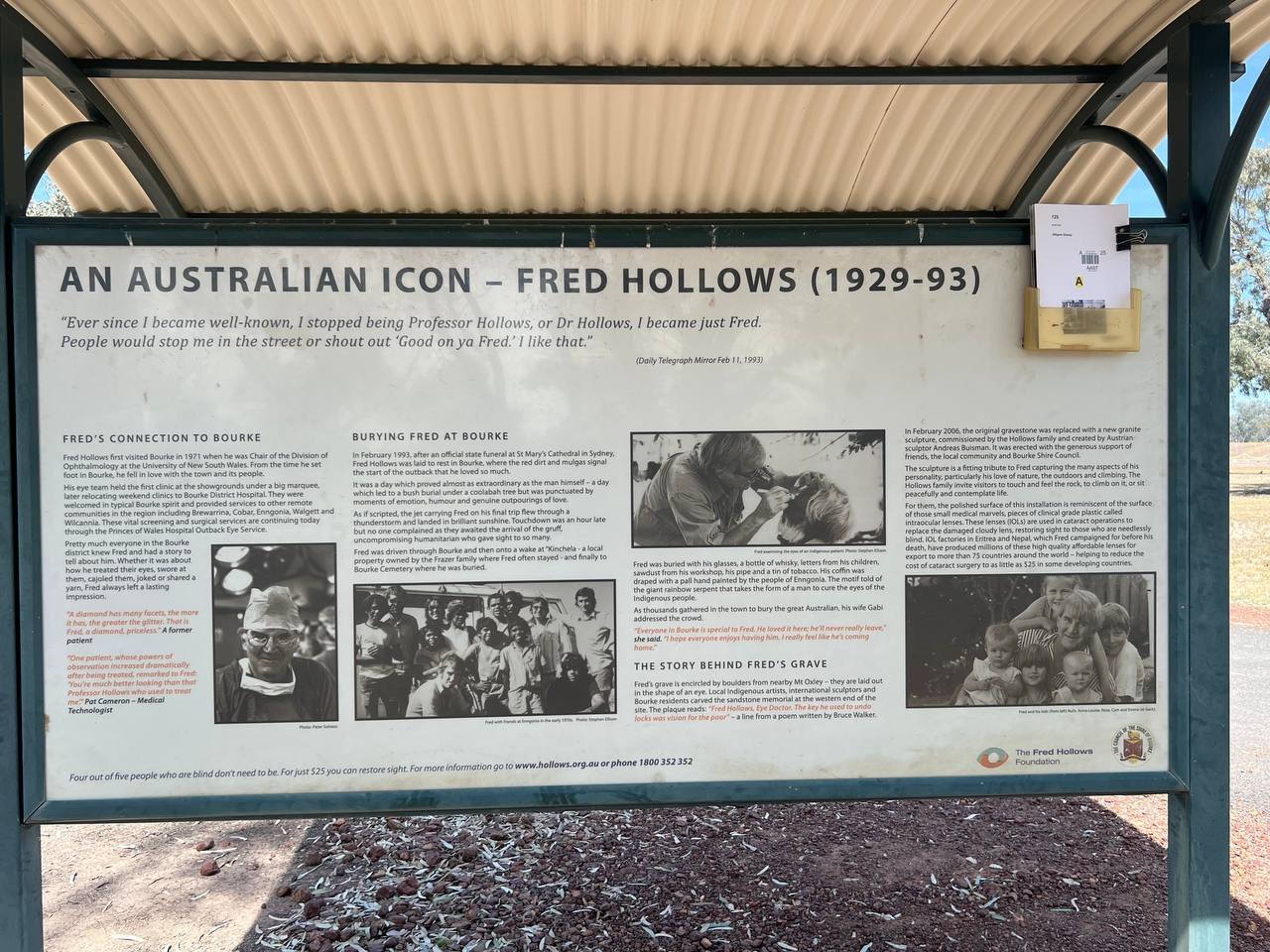 The memorial panel at the grave.
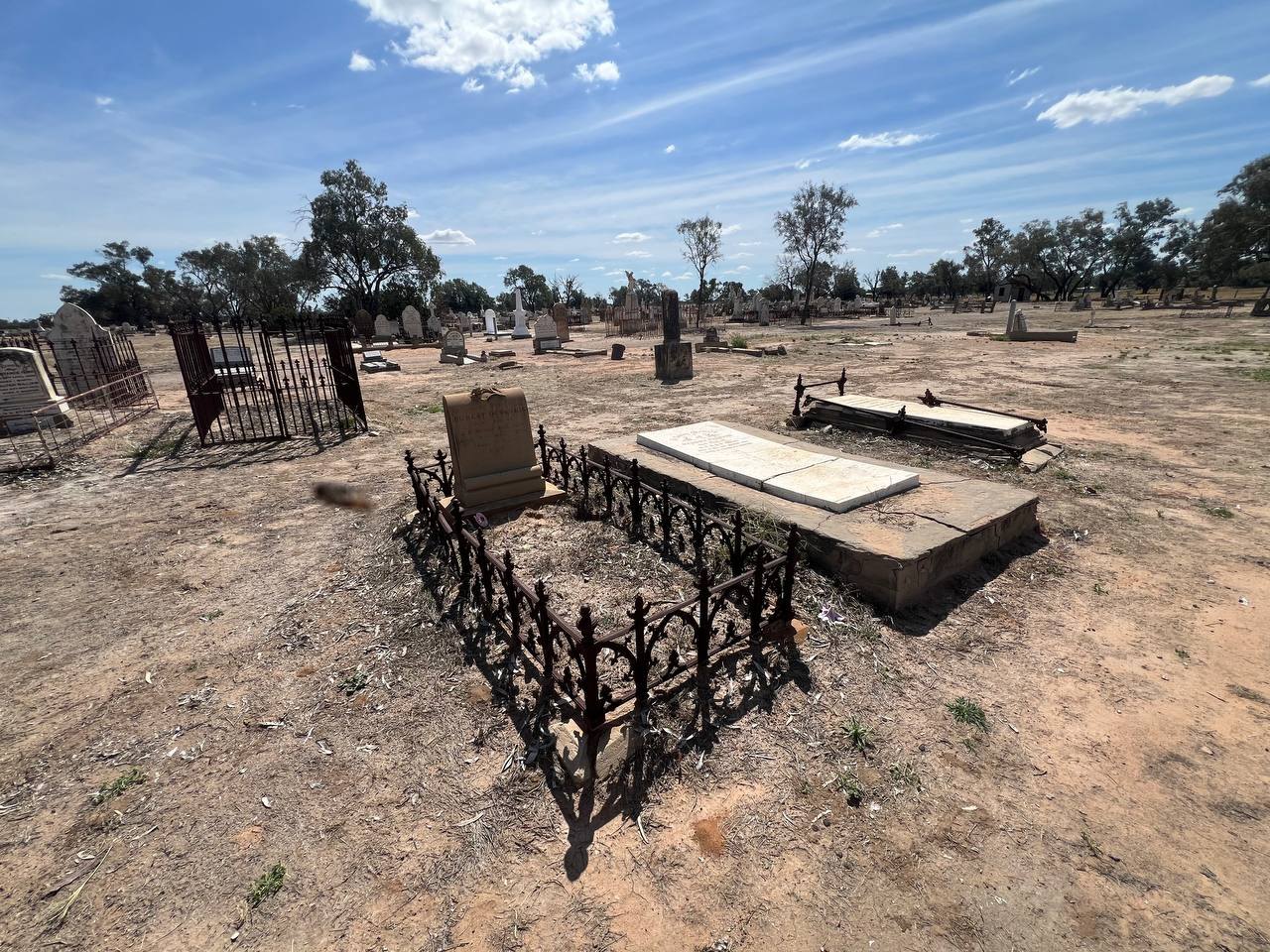 The rest of the cemetery keeps its own history.
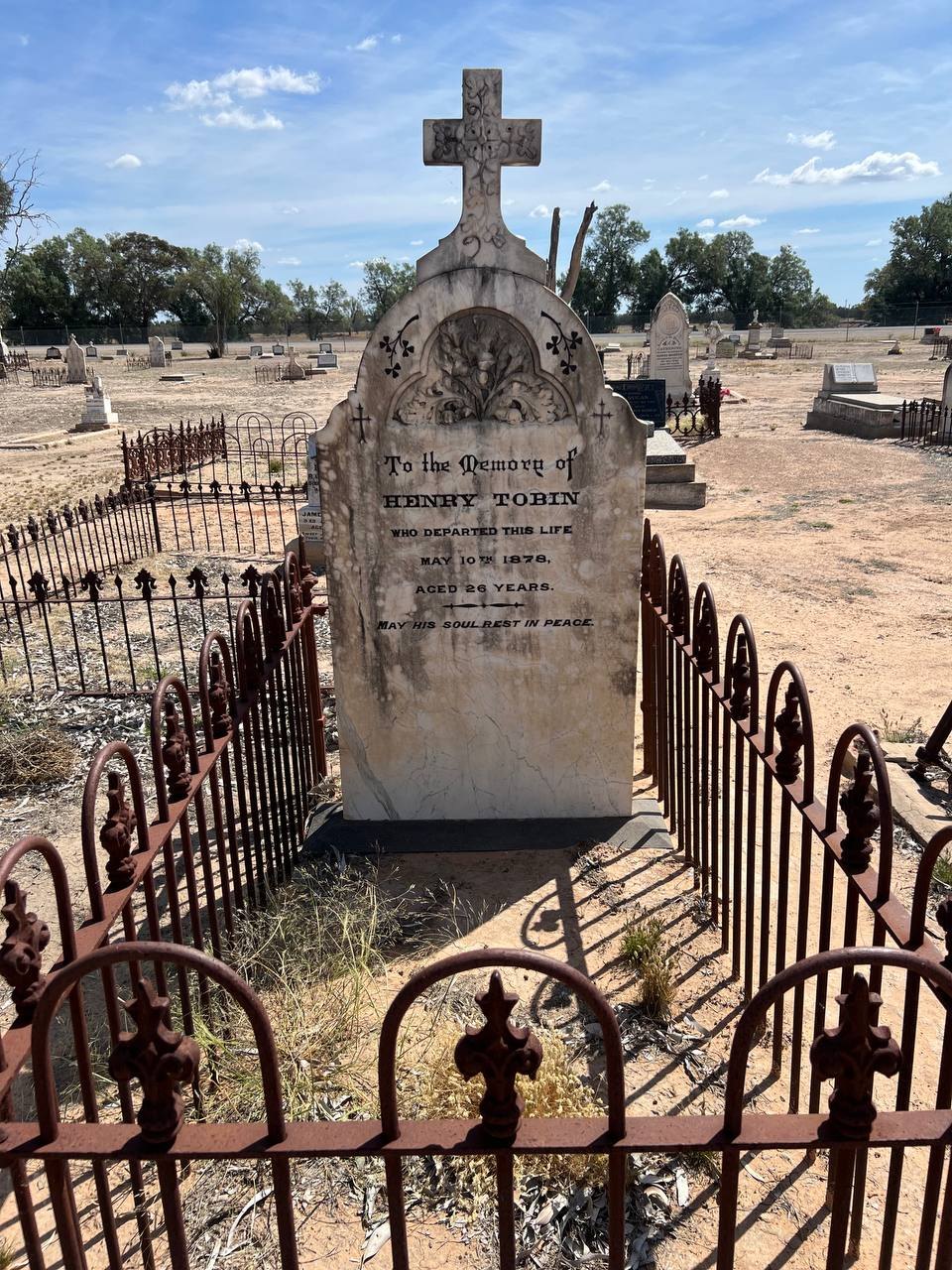 Henry Tobin, departed this life May 10th 1878, aged 26 years. The Darling was busy then.
The Jandra
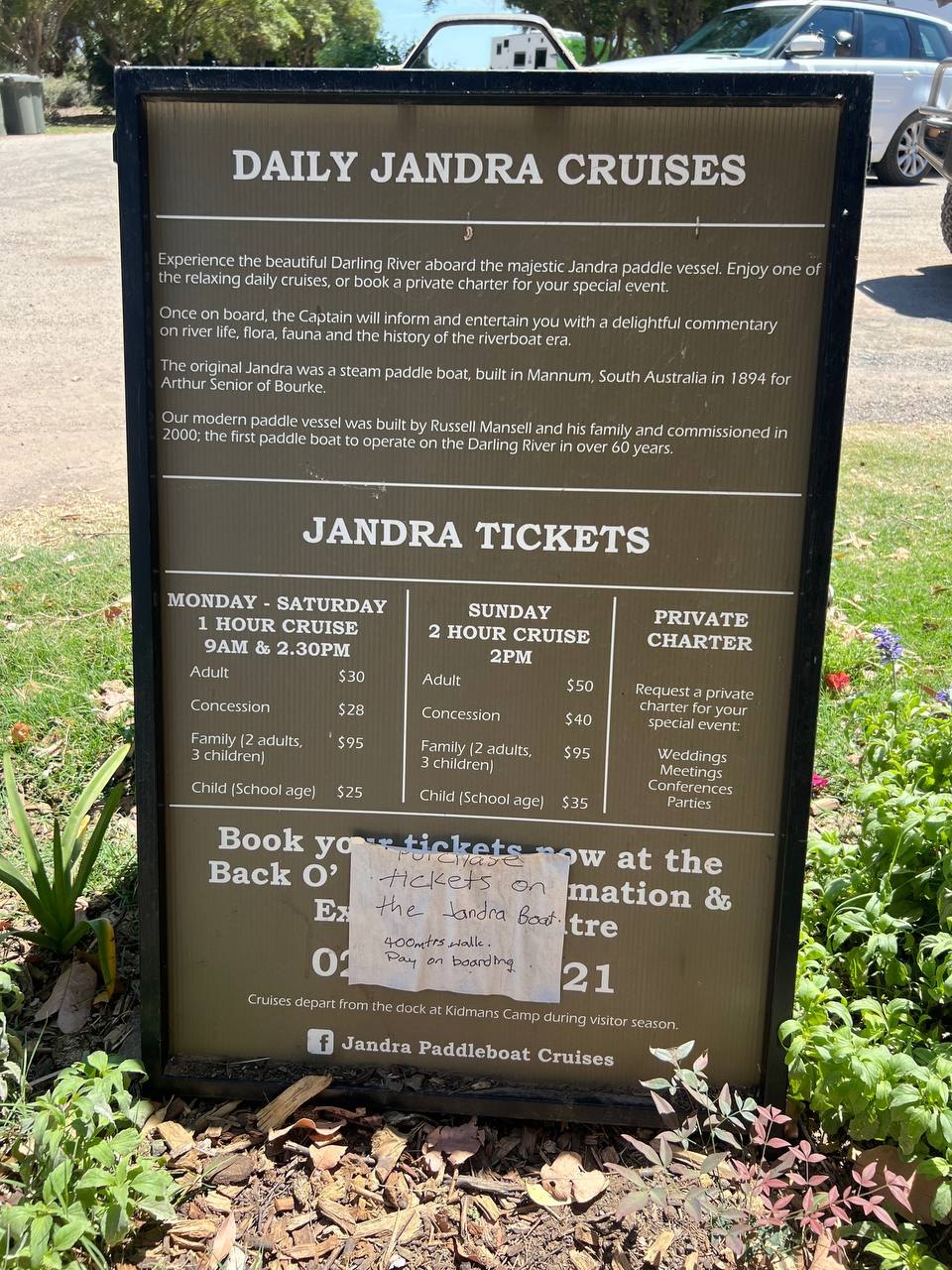 Daily cruises from the dock at Kidmans Camp.
In the afternoon we did a trip on the Jandra, a paddle boat cruising the Darling out of Bourke. The boat is a replica of the original PV Jandra, built at Mannum in South Australia in 1894 for Arthur Senior of Bourke. The modern vessel was built by the Mansell family and officially commissioned in 2001.
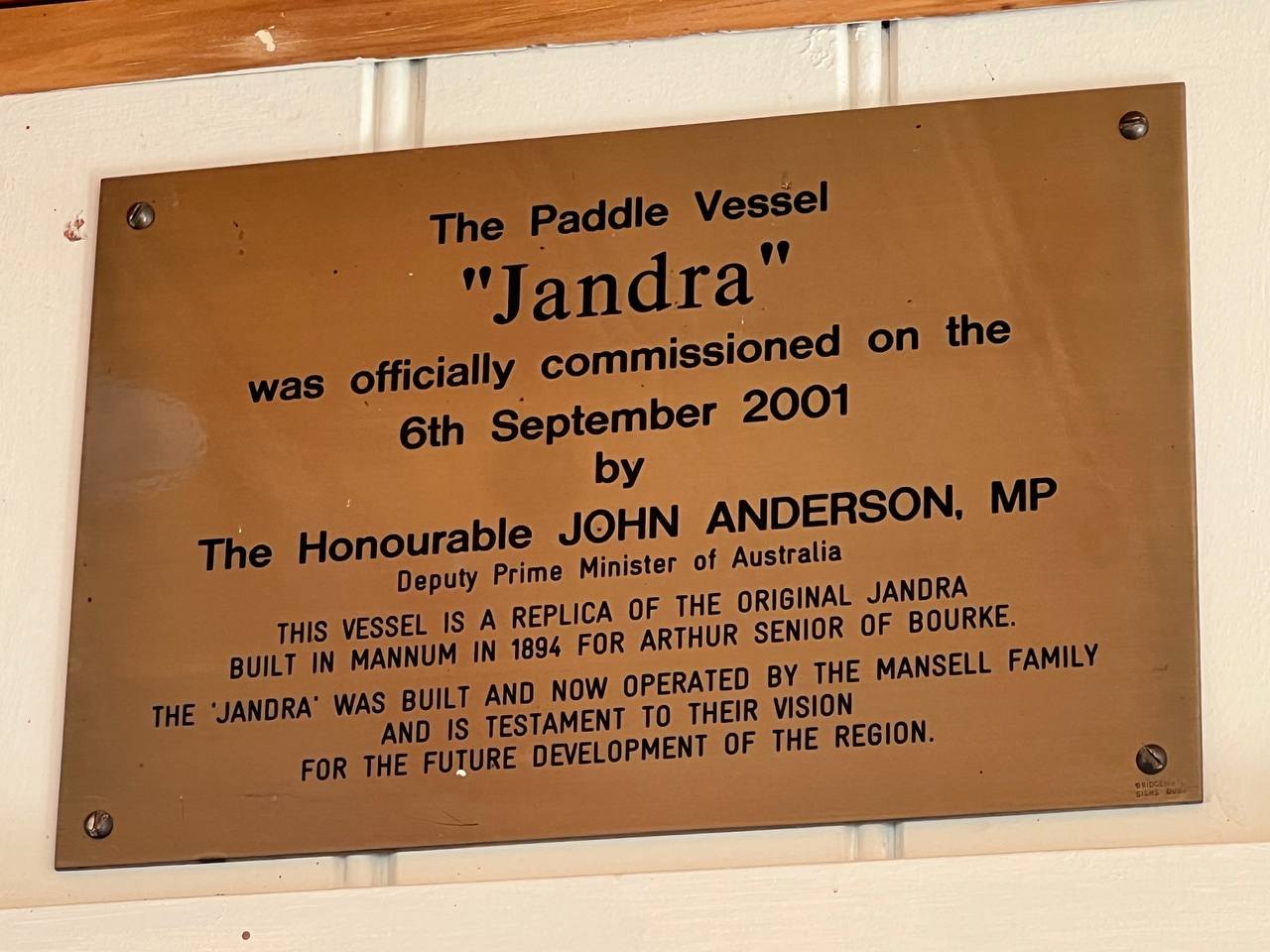 The commissioning plaque.
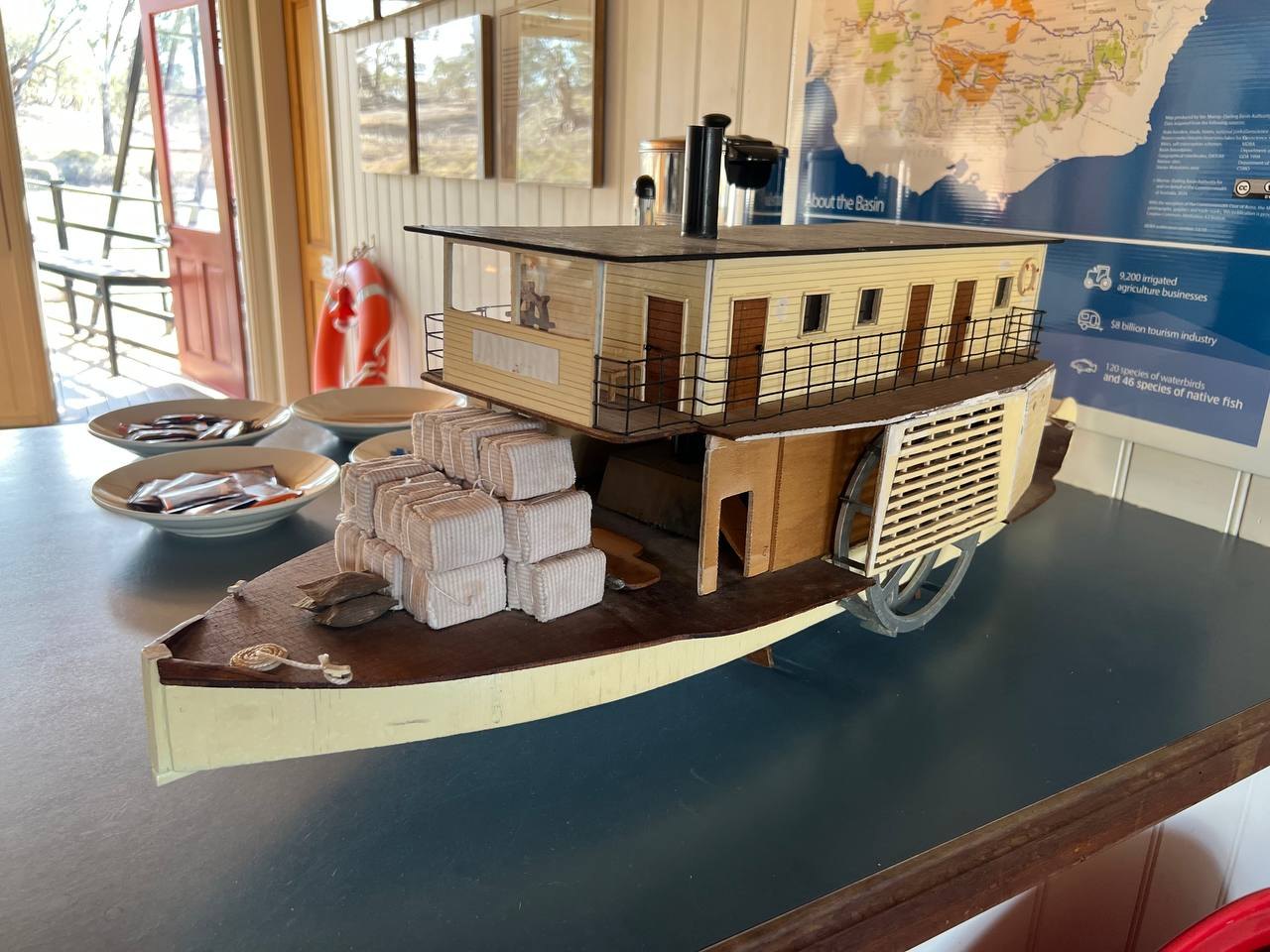 A paddle steamer in miniature, with the Basin's vital statistics behind it.
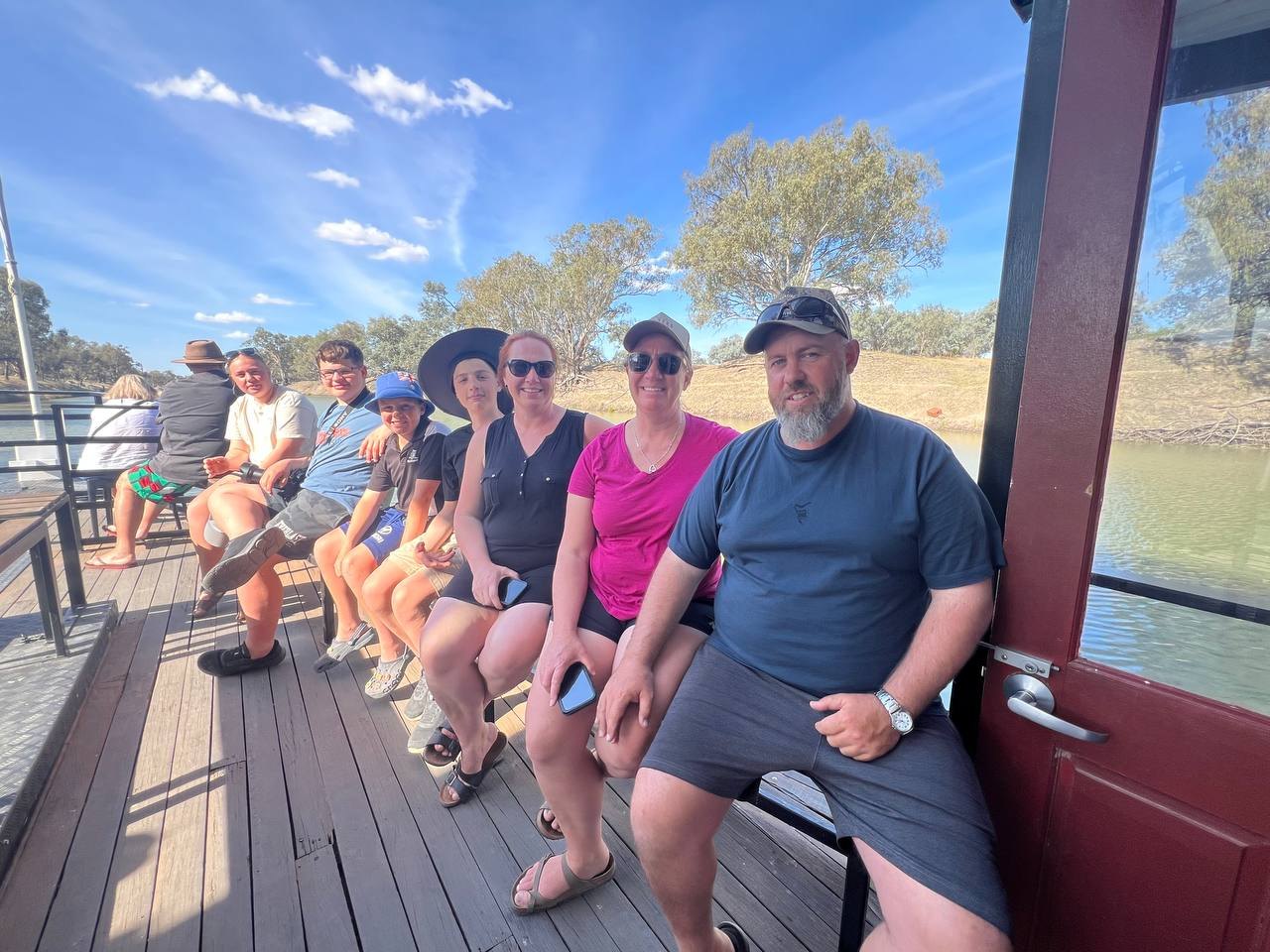 The touring party, aboard.
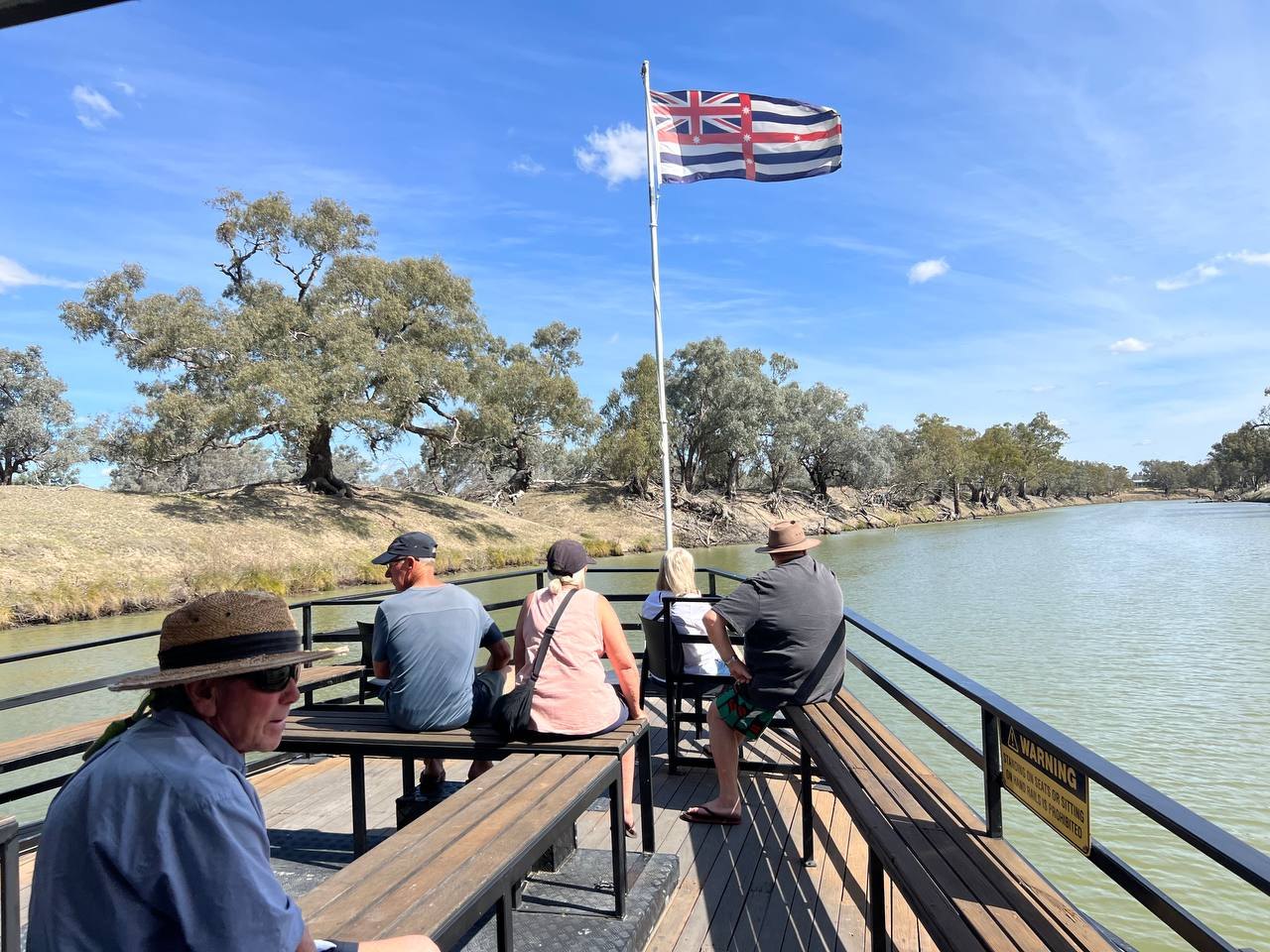 Cruising the Darling under the Murray River flag.
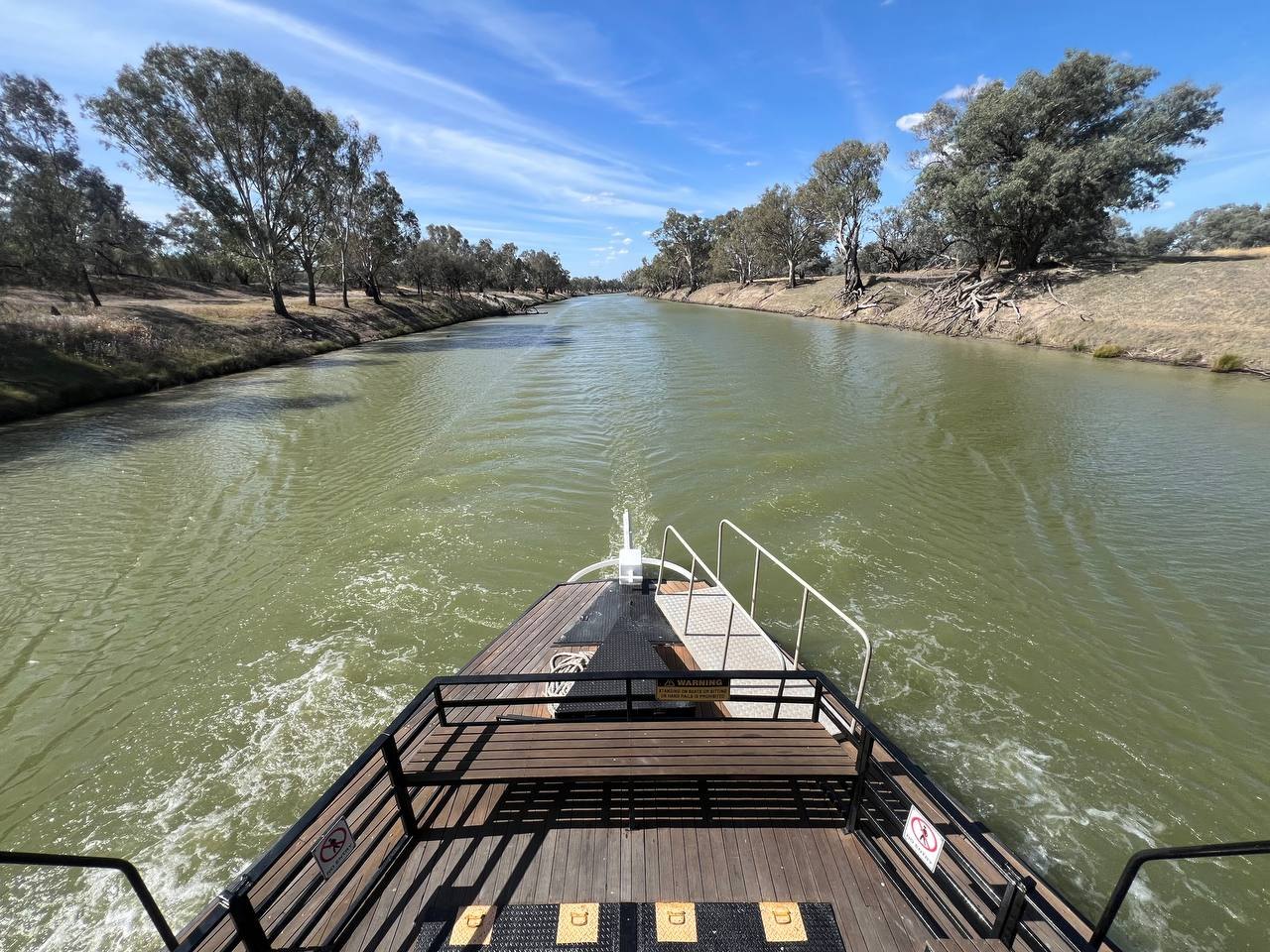 The view from the bow.
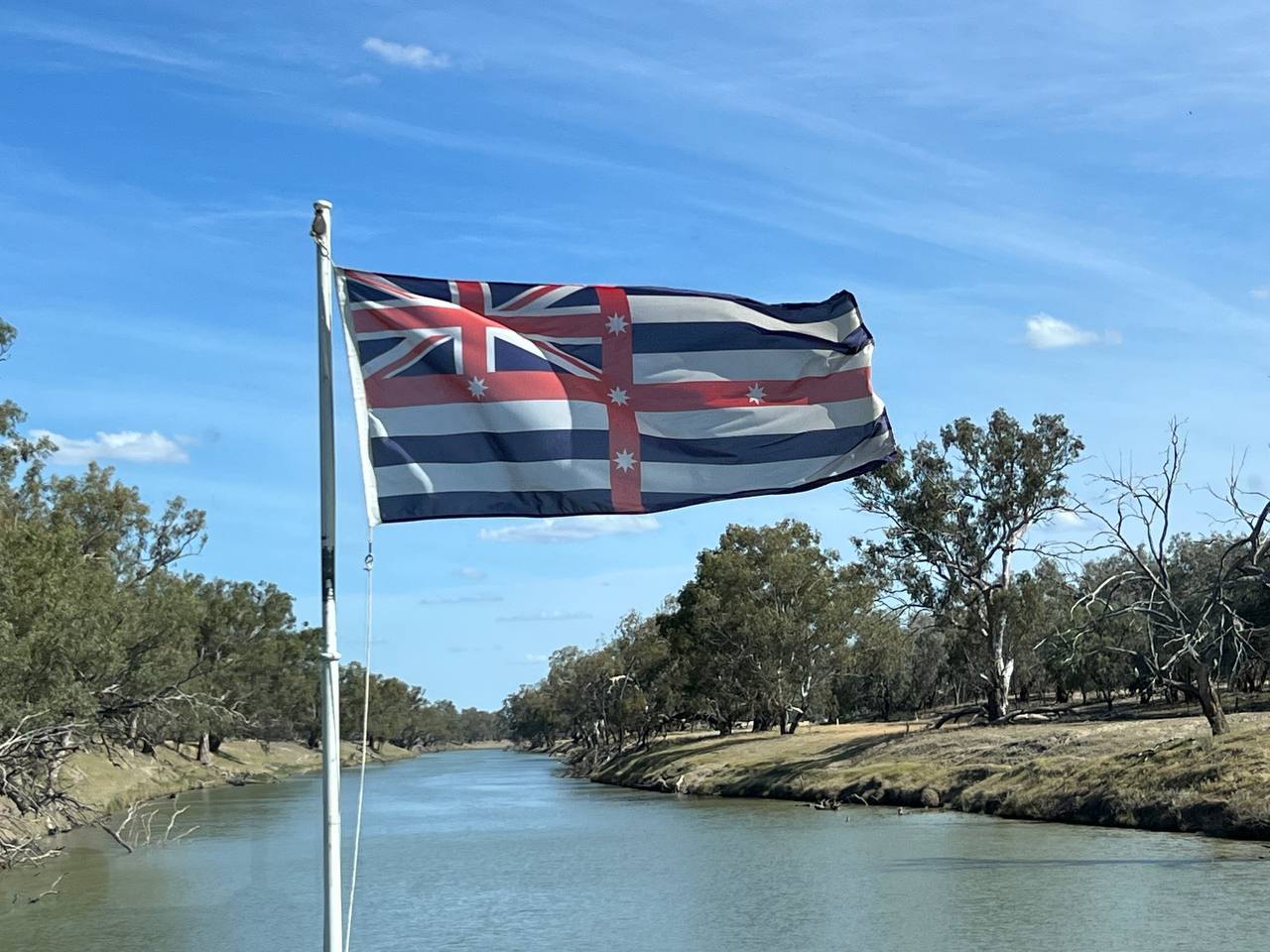 The flag: Union Jack in the canton, stripes for the river, stars for the Southern Cross. The riverboatmen's banner since the 1850s.
Knocking off
We checked into the caravan park just out of town and finished the day properly.
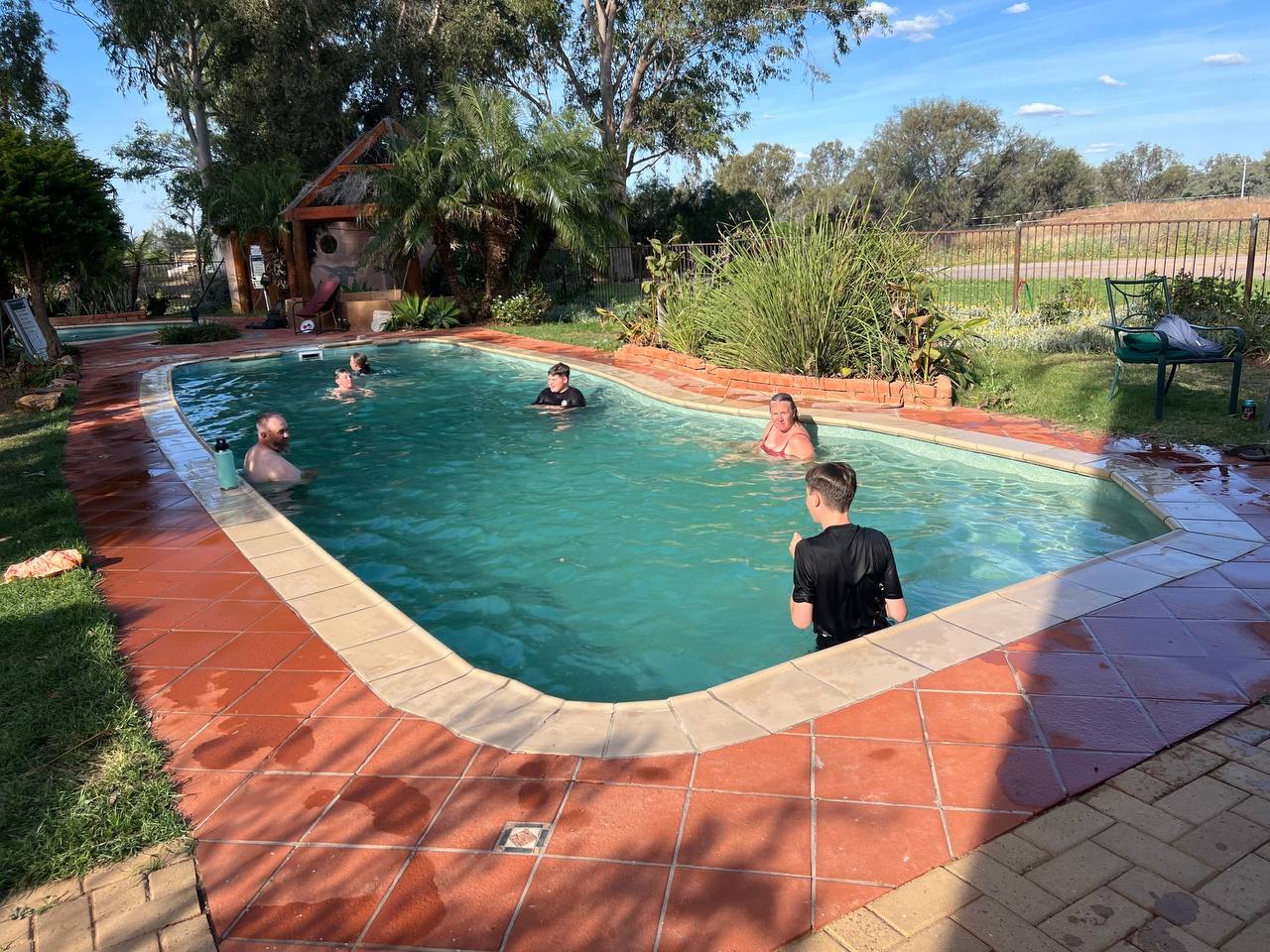 Beers by the pool. The correct end to a driving day.
Five days down. Bourke tonight, then further south.